For centuries, maldharis traversed migration routes across Kachchh district of Gujarat. The maldharis are nomadic pastoralists
of Kachchh – in Gujarati, ‘mal’ refers to the animals (the word literally means ‘material’) and ‘dhari’ are the people who keep
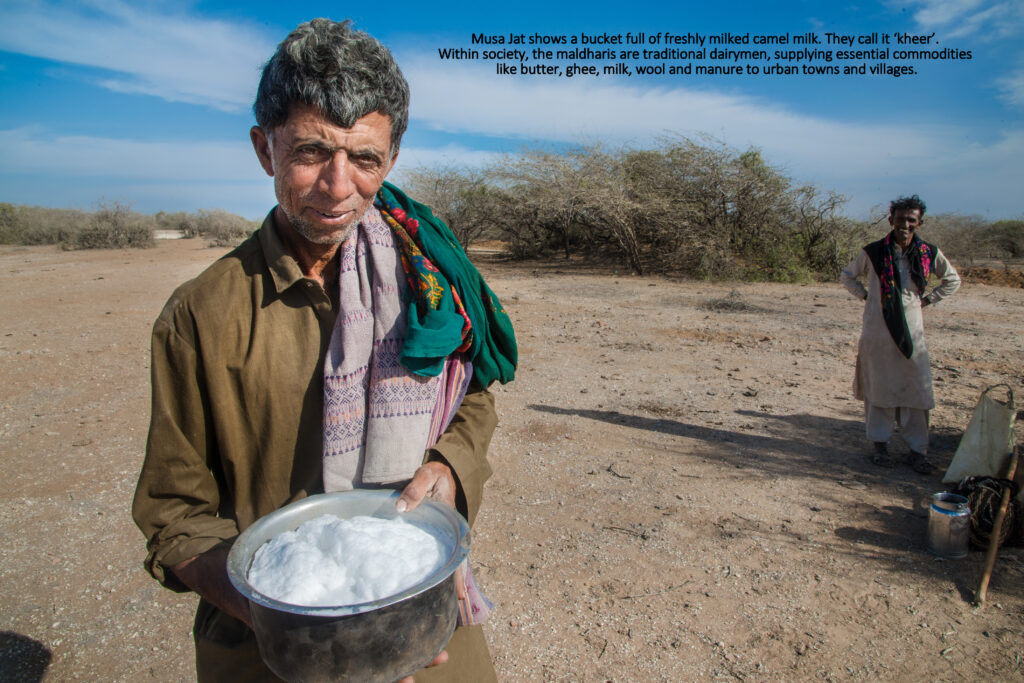
these animals. Within society, the maldharis are traditional dairymen, supplying essential commodities like butter, ghee, milk,
wool and manure to urban towns and villages. Their herds include camels, sheep, goats, buffaloes and cows. Because they
live in semi-arid coastal areas and constantly move around, the maldharis are reliant on indigenous camel breeds for transport
and livelihood. The major maldhari communities of Kutch are the Jats, the Rabaris and the Sama. They can be Hindu (Rabaris)
or Muslim (Jats and Sama), but all the communities share amiable ties and similar philosophies of nomadic life.
Forefathers of the Jats came from Haleb in Baluchistan 500 years ago. They fled following a feud between the King of
Baluchistan and some members of our community. Before they left, they sold all their small ruminants and cattle and replaced
these with camels, to transport them on the long journey ahead and to allow them to maintain an animal centred livelihood
later on. They then traversed Sindh, eventually coming to settle in Kachchh. Over time the community spread across the
district with their camels.
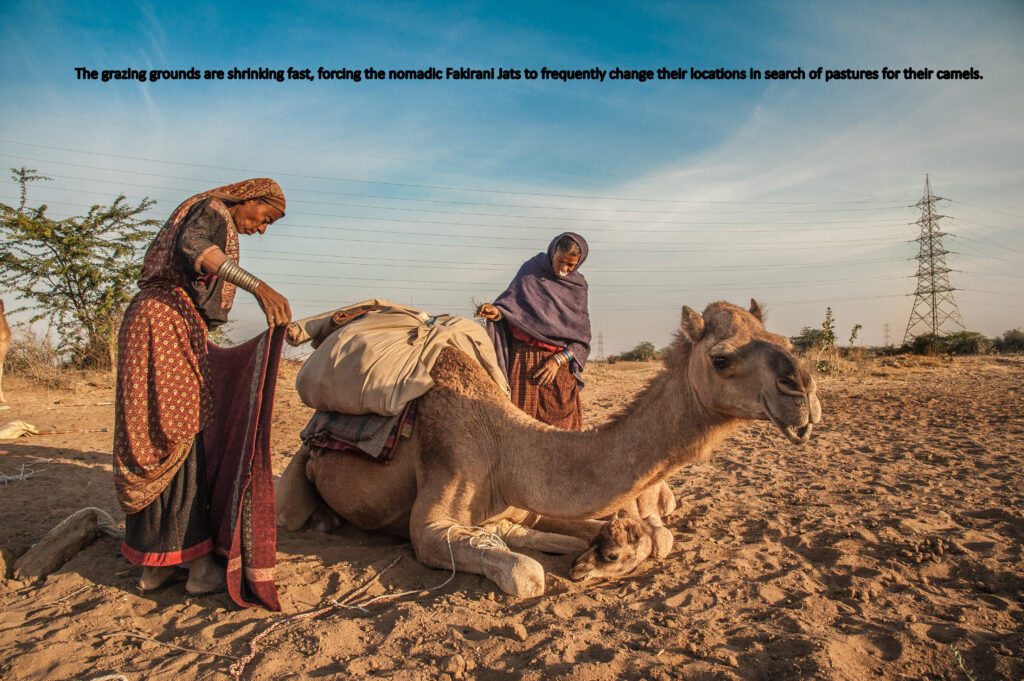
Fakirani Jats herd camels and have lived for generations in arid and semi-arid areas of coastal Kachchh. Fakirani Jats are
Muslims who follow the Sufi saint “Savla Pir,” who lived approximately 400 years ago on an island in Kori Creek with his herd
of camels. Fakirani Jats pastoralists by occupation they have led a nomadic life for centuries. But they see themselves as
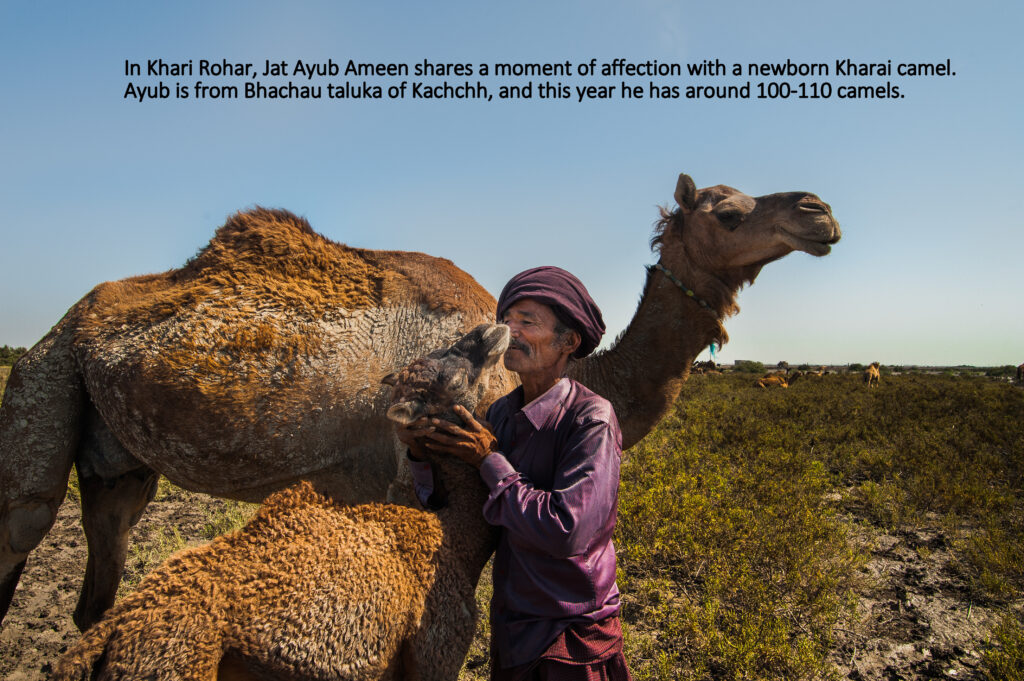
camel breeders first, moving around the region with their camels and families. Fakirani women actively take care for the herd
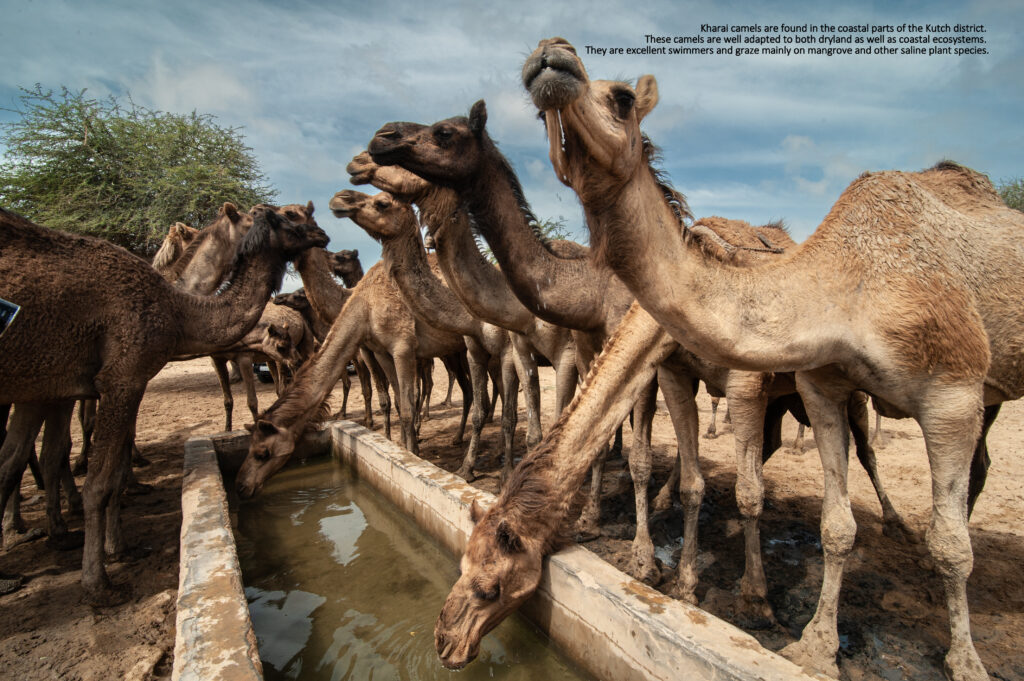
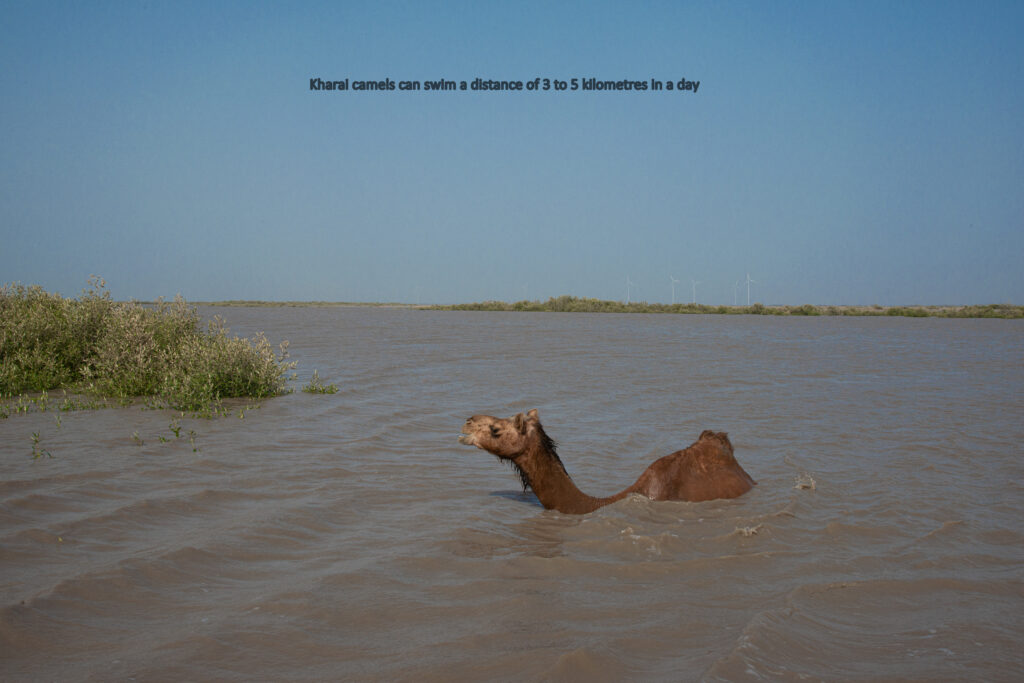
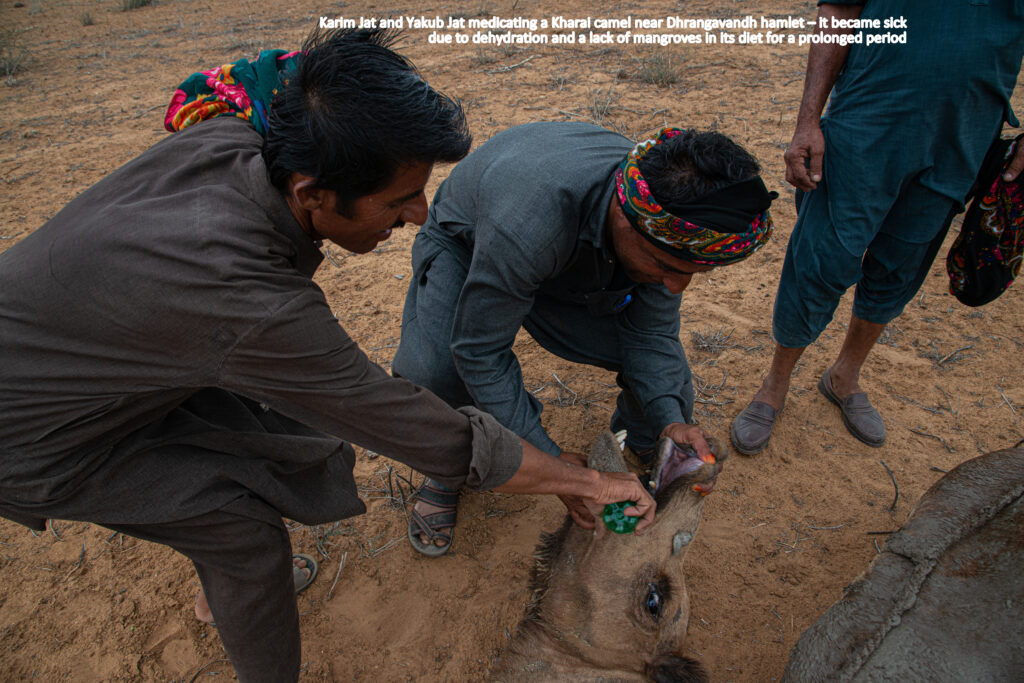
and look after the new-born camels. They keep an indigenous camel breed known as Kharai as well Kutchi camels. ‘Kharai’ in
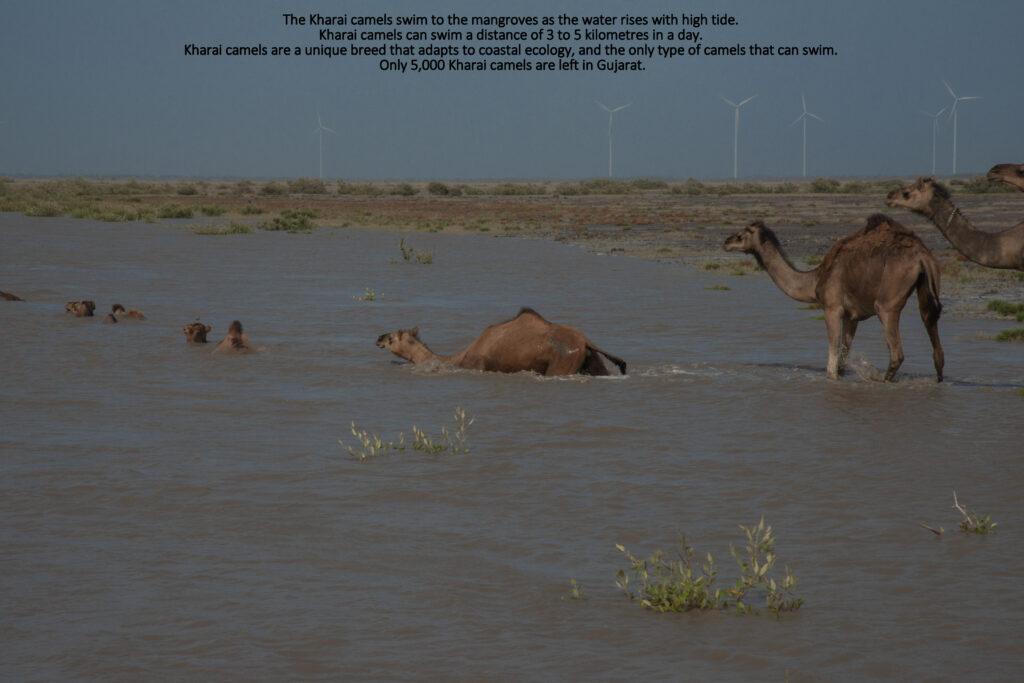
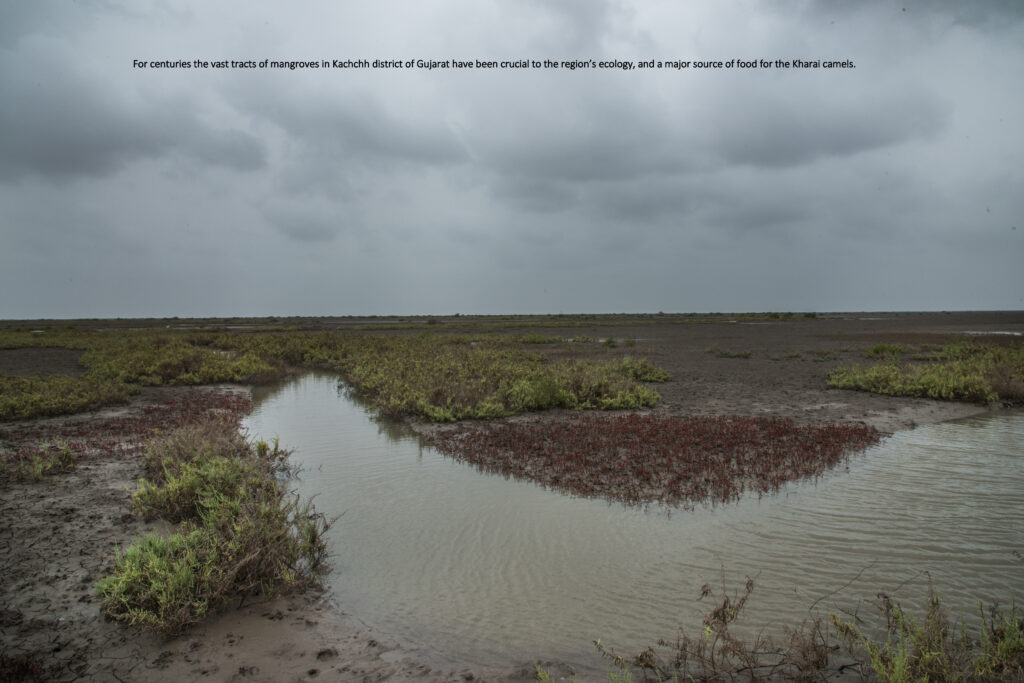
Gujarati means ‘salty’. The Kharai camel is a special breed that has successfully acclimatised to an ecozone very different from
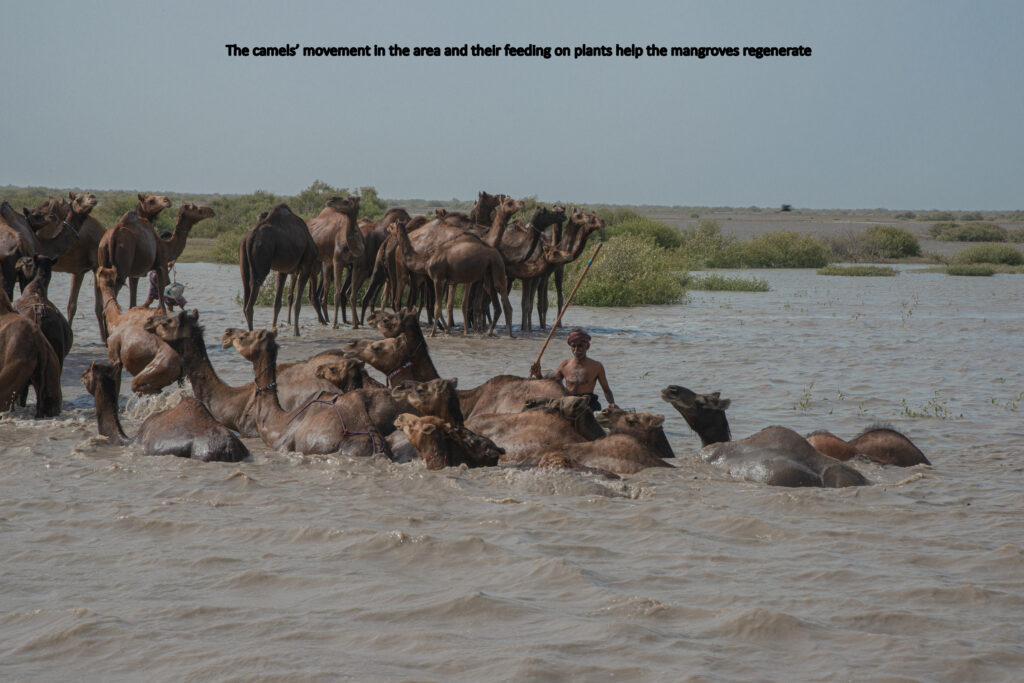
those you’d normally associate with camels. Their diet includes various plants, shrubs, and very importantly mangroves.
These animals – the only dromedaries known to swim – are accompanied by a team of herders from the particular maldhari
unit or clan that owns them. But initially the Fakirani community were not camel keepers. The long-standing relationship
between the Hindu Rabaris and Muslim the Fakirani Jats is narrated in an old story. Once two Rabari brothers had a
disagreement over owning a camel to resolve their dispute, they went to our revered saint Savla Pir, who created a camel out
of beeswax and asked the brothers to choose between the real one and the one he created from beeswax. The elder brother
quickly chose the living camel and left. The younger one, Devidas Rabari, was left with the wax camel. The saint blessed
Devidas and assured him that a camel herd will follow Devidas on his return journey. His herd would grow if he promised not
to look back till, he reached home. Devidas could not keep his curiosity in check and turned back just before reaching home.
There was a sizable number of camels following him, but now that he had broken the promise the numbers stopped growing.
Savla Pir had also told Devidas, that if he should find himself with too many camels, he should entrust them to the care of
the Jats. This is why even today, Jat communities take care of camels assigned to them by the Rabaris. The long-standing
relationship between the Hindu Rabaris and Muslim the Fakirani Jats.
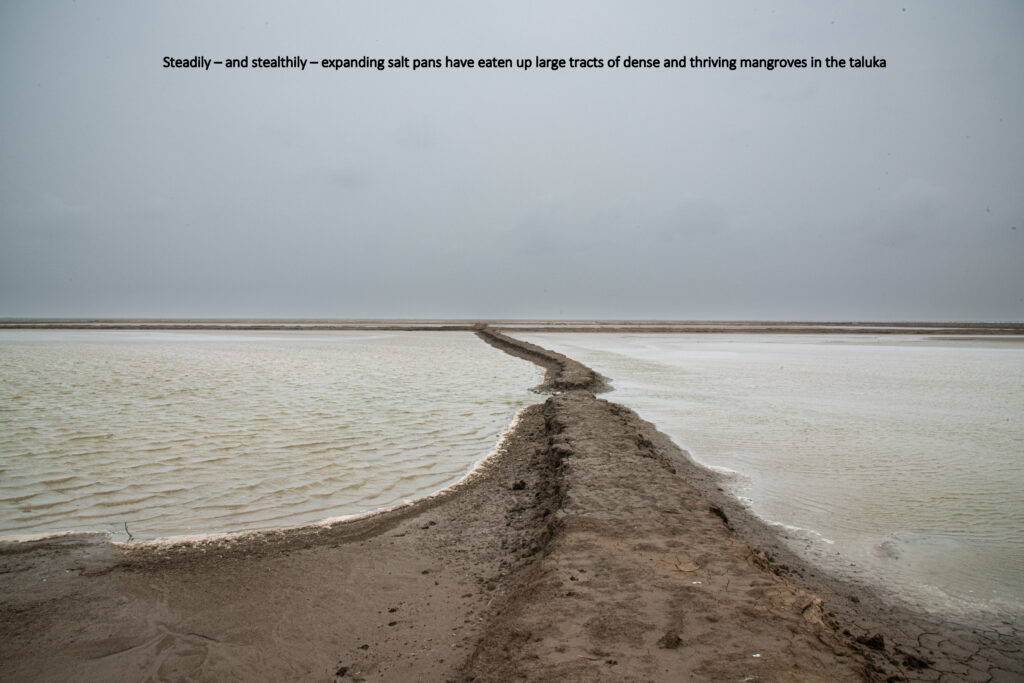
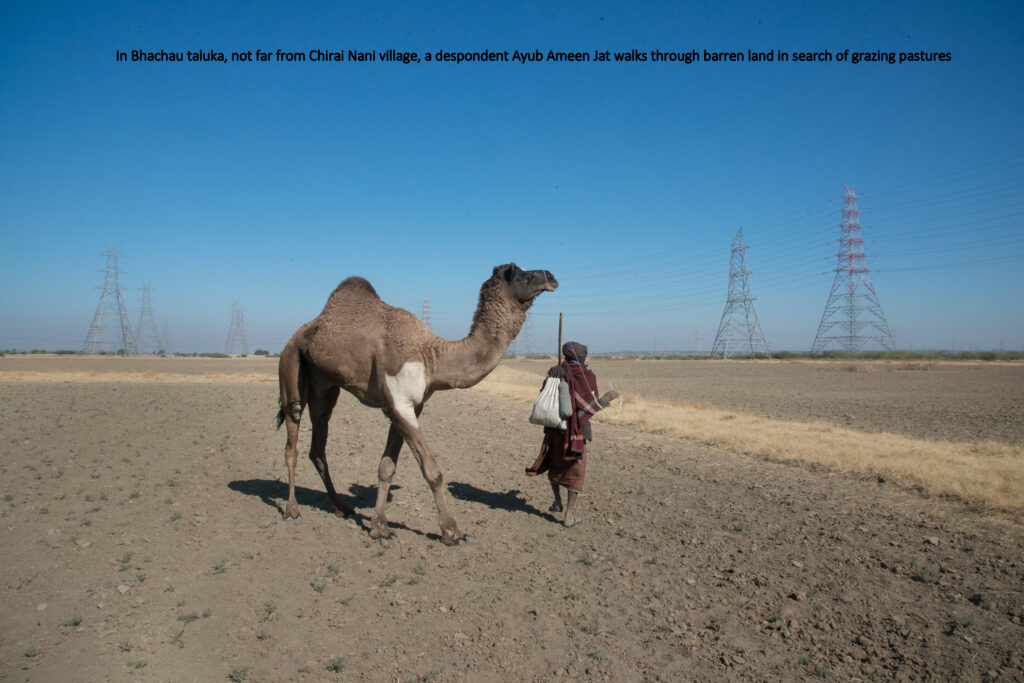
The Fakirani Jats, a traditional pastoralist community residing in the Gujarat, are increasingly facing threats to their livelihood
and cultural heritage due to expanding industrialization. The encroachment of industries onto their grazing lands disrupts
their pastoral practices, impacting their primary source of income and sustenance. Furthermore, the influx of industrial
activity introduces environmental pressures, including pollution and resource depletion, which further strain the delicate
ecosystem the Fakirani Jats depend upon. This combination of economic and environmental pressures poses a significant
challenge to the community’s way of life and their ability to maintain their unique cultural identity in the face of
modernization. The Fakirani Jats’ traditional knowledge and practices related to animal husbandry and land management
are also at risk of being lost as their traditional lifestyle is disrupted. Many families have already sold their camels, abandoned their traditional lifestyle, and adopted sedentary one. The numbers of endangered Kharai camels have also decreased
substantially. These photographs depict the last surviving nomadic camel herders in Kachchh and India.